Retaining Walls & Concrete Masonry
Build strong, attractive retaining walls and masonry structures that protect your property and add usable outdoor space.
Turn Slopes Into Usable Space With Retaining Walls
Sloped yards present challenges for landscaping, drainage, and usable outdoor space. Retaining walls solve these problems by creating level terraces, preventing erosion, and adding structure to your landscape. At VistaView Monterey Park Concrete, we design and build retaining walls and concrete masonry structures that combine engineering strength with attractive appearance.
Retaining walls are not just decorative landscaping features. They are structural elements that must be properly engineered to hold back soil, handle water pressure, and resist settling. Poor retaining wall construction leads to wall failure, property damage, and expensive repairs. We build walls that are designed correctly from the start with proper footings, drainage, and reinforcement.
We work with homeowners and businesses throughout Monterey Park to create functional outdoor spaces on challenging terrain. Whether you need a small garden wall or a large multi-tier retaining system, we have the experience and equipment to build walls that last for decades.
Retaining Wall Solutions We Provide
Different situations call for different retaining wall solutions. Here are the types of walls and masonry structures we build:
- Poured concrete retaining walls: The strongest option for tall walls and heavy loads. Reinforced concrete walls with proper footings can hold back large amounts of soil and handle high water pressure.
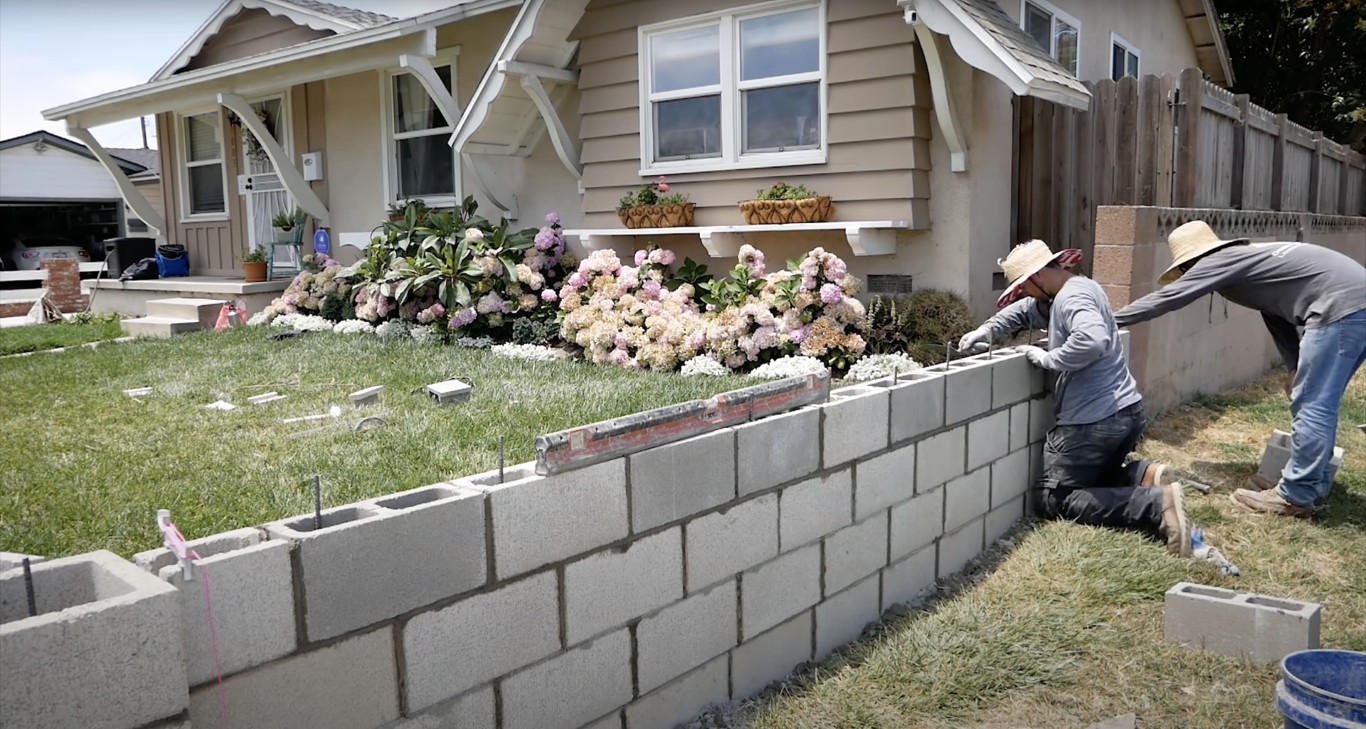
- Concrete block retaining walls: Built with interlocking concrete blocks or standard concrete masonry units. Good for medium-height walls and offers design flexibility with different block styles and finishes.
- Decorative masonry walls: Combine functionality with attractive appearance using textured blocks, stone veneers, or custom finishes. These walls serve as both landscape features and property boundaries.
- Terraced retaining systems: Multiple shorter walls that create level planting beds or outdoor rooms on steep slopes. Terracing reduces pressure on individual walls and creates more usable space.
- Garden and planter walls: Shorter walls designed for landscaping purposes like raised planting beds, tree wells, and decorative borders. Built to complement your overall landscape design.
- Commercial masonry structures: Larger retaining walls for parking lots, building sites, and commercial properties. Engineered to meet commercial load requirements and building codes.
Proper Engineering Makes the Difference
Retaining walls fail when they are not designed correctly. The wall must resist soil pressure, handle water buildup behind the wall, and maintain stability as the ground shifts with seasons. Here is what goes into proper retaining wall design:
Foundation and Footings
Every retaining wall needs a solid foundation. We excavate below frost line and pour concrete footings sized appropriately for wall height and soil conditions. The footing distributes weight and prevents settling that would cause wall failure.
Drainage Systems
Water buildup behind retaining walls creates pressure that can push walls over. We install drainage pipes and gravel backfill to move water away from the wall. Weep holes or drain outlets allow water to escape rather than building up pressure behind the wall.
Reinforcement
Taller walls need reinforcement to handle lateral soil pressure. Poured concrete walls use steel rebar in a grid pattern. Block walls may use vertical rebar in cores filled with concrete. Some walls also use tiebacks or deadman anchors for additional stability.
Proper Backfill
The soil behind the wall matters as much as the wall itself. We use gravel backfill immediately behind the wall for drainage, then compact fill dirt properly to prevent settling. Poor backfill techniques cause walls to lean or crack over time.
Our Retaining Wall Installation Process
Building retaining walls starts with a site evaluation. We assess your slope, soil type, drainage patterns, and how you want to use the space. For walls over 4 feet tall or walls supporting structures, we work with structural engineers to create proper designs and ensure building code compliance.
Construction begins with excavation for footings and drainage installation. Footings are poured and allowed to cure before wall construction begins. Walls are built in layers or courses, with proper reinforcement and backfilling as we go. Drainage systems are installed and tested to ensure water flows away from the wall.
For multi-tier systems, we build from the bottom up, allowing each level to stabilize before adding the next tier. This creates a stable, integrated system rather than independent walls that might fail separately. The finished walls are backfilled, compacted, and ready for landscaping or other use.
If you are planning other improvements to your outdoor space, consider combining your retaining wall project with our patio installation or walkway services to create a complete outdoor living area.
Need a Retaining Wall or Masonry Work?
We provide free site evaluations and quotes for retaining walls and masonry projects. Let us assess your property and show you what is possible. Contact us today to get started.